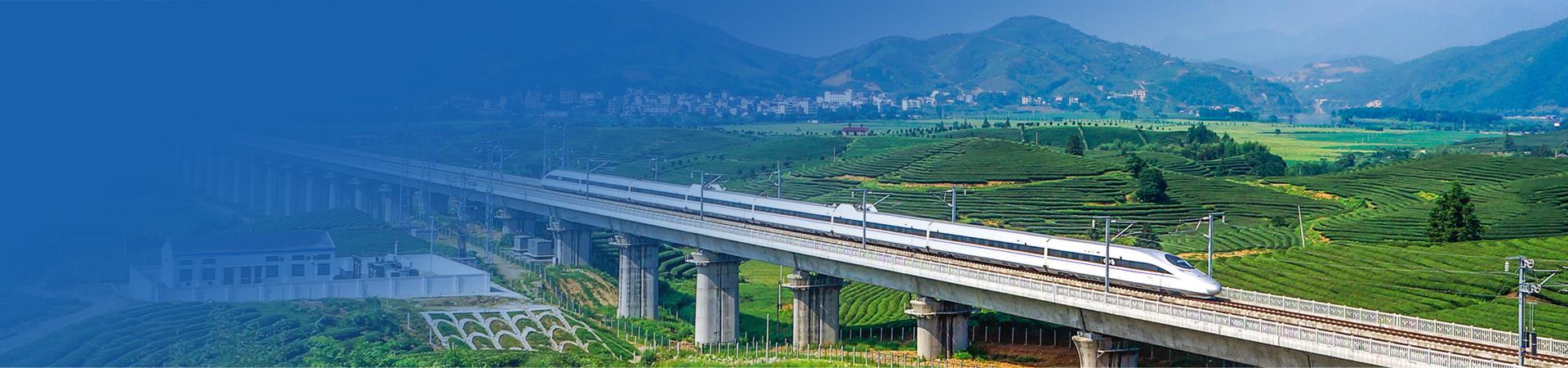

April 22 marks World Earth Day. China Railway Group Limited (CREC) has unswervingly adhered to the high-quality development path prioritizing ecology, green development and low carbon. With steel and iron as the brush and ingenuity and wisdom as the ink, it draws magnificent blueprints for ecological and environmental protection, empowering environmental governance and ecological civilization construction, and making the sky bluer, mountains greener and water clearer.
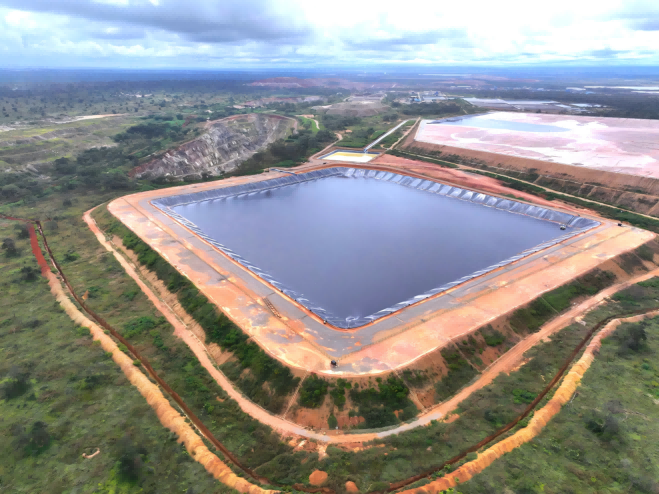
The 10,000-mu Aquaculture Pond Upgrading and Renovation Project in Tonghu, Huizhou, Guangdong, undertaken by the Guangdong Branch of China Railway No.3 Engineering Group, is an important demonstration project for promoting the green transformation of fishery in the Pearl River Delta. The project team has built 73 key tail water treatment facilities and fully promoted the treatment process of "pretreatment tank + three ponds and two dams". Combining physical sedimentation, biological filtration and ecological purification, it realizes systematic and resourceful treatment of aquaculture tail water, covering a treated tail water area of 970 mu. It curbs the direct discharge of aquaculture wastewater at the source and remarkably improves the ecological environment of Tonghu waters.
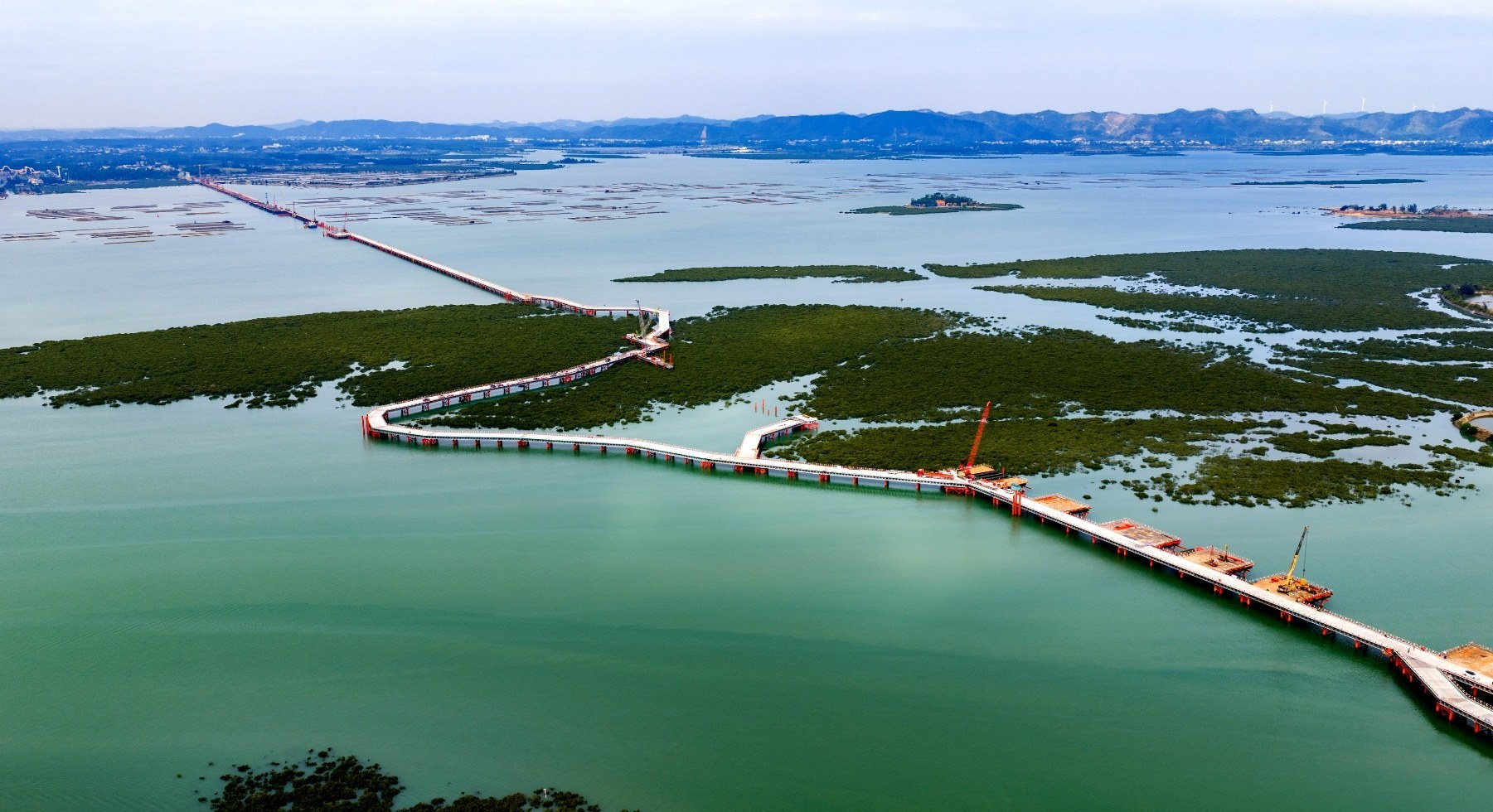
Lot 3 of the Guangxi Section of Hepu-Zhanjiang High-speed Railway constructed by China Railway Major Bridge Engineering Group is the only section across rare mangrove species along the whole line. In particular, the section from Pier 140 to Pier 164 of Tieshan Port Sea-crossing Bridge boasts the most concentrated mangrove resources along the railway. To avoid mangroves, the trestle bends at least 11 times in total. As a result, the route length has doubled from more than 2 kilometers to 4 kilometers compared with the straight layout, leading to a substantial increase in construction costs. Not only the trestle makes way for mangroves, China Railway Eryuan Engineering Group also took the impact on mangroves into consideration in the design of main railway bridges. Most of the 222 piers of the whole bridge adopt simply supported beam structure with a pier spacing of 32 meters. The continuous beam structure is adopted in key sections crossing mangroves, with the pier spacing expanded to 128 meters. The application of continuous beam structure reduces 33 piers, providing 33 more growth spaces for mangroves. From the active bending of the trestle to the deliberate reduction of piers, constructors have minimized the project's impact on mangroves at the design source, truly realizing the goal of "building bridges without damaging greenery and opening roads with better ecological protection".

In Nansha, Guangzhou, an ecological picture featuring "clear water, green banks and integrated city and ecology" is unfolding slowly. The urban green space system project undertaken by China Railway Sixth Group takes green as the brush and environmental protection as the ink, weaving 12 engineering units covering about 894,700 square meters of land into a vibrant urban "green lung". Adhering to the principle of "ecology first and environmental protection priority", the project team reshapes the biodiversity of aquatic-terrestrial ecotones through ecological revetment restoration and aquatic plant allocation for river systems. Protective green spaces perform functions of dust retention, noise reduction and carbon sequestration. In particular, the space under the South Second Ring Road viaduct has been transformed from a forgotten corner into an ecological corridor with rich layers. The dotted street green spaces make it a daily life for citizens to "see greenery right outside the door and enter parks within steps".
The Ecological Restoration Infrastructure Construction Project of East Lake Area in Tangshan City, Hebei, undertaken by the 8th Branch of China Railway No.10 Engineering Group, was originally a century-old coal mining area. It used to be plagued by sewage overflow, garbage everywhere and turbid air, serving as an urban scar between the central urban area and Kaiping District of Tangshan. The project team devoted themselves to tackling chronic urban ecological problems, turning sewage-covered land into blooming landscapes and industrial ruins into ecological models, with a total greening area of about 3.63 million square meters. A total of 165,000 trees have been planted, along with 26 types of green plants and 56 types of flowers.

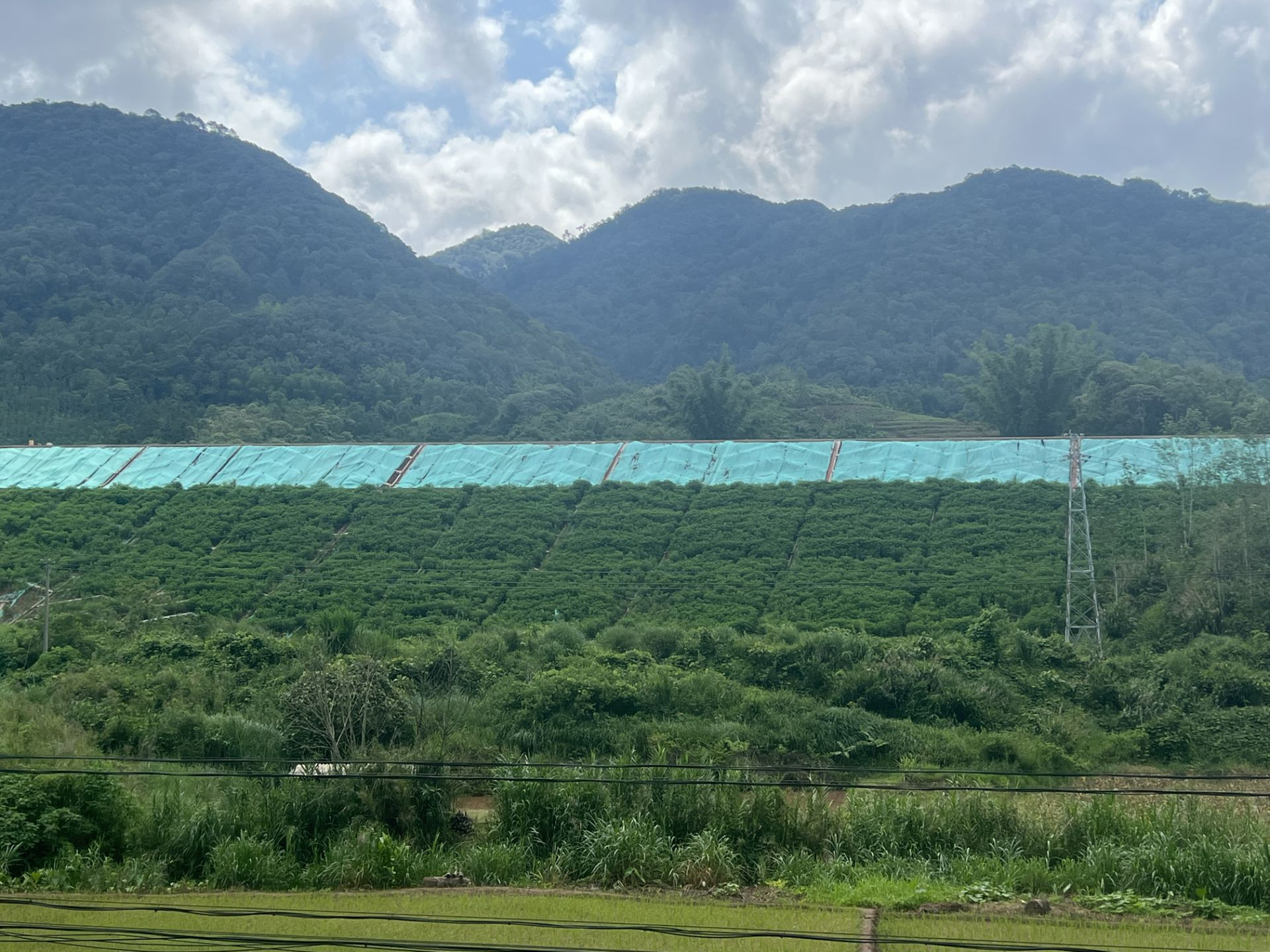
MKM Mining of China Railway Resources Group adheres to the concept of green development and continuously promotes mine ecological restoration. In the slope treatment of the tailings pond, following the combined approach of engineering treatment and ecological restoration, systematic measures including slope shaping, soil covering improvement and vegetation restoration have been implemented. Scientifically selected drought-tolerant and soil-fixing grass species are planted to effectively improve slope stability and ecological functions. At present, the tailings pond area of MKM Mining has been gradually covered by green vegetation, soil erosion has been significantly curbed, and the ecological environment keeps improving.
Lot 3 of Mengxing-Jiangcheng-Lvchun Expressway undertaken by China Railway Beijing Engineering Group is located in Yiwu Town, Mengla County, Xishuangbanna Dai Autonomous Prefecture, Yunnan Province, with a total length of 21.5 kilometers. Faced with the challenges of high subgrade proportion and large slope protection area, the project team used waste tires to replace traditional concrete. By assembling 20-inch waste tires into arch frameworks matched with drainage facilities, an ecological slope protection system is constructed to practice the circular economy concept. The technology has three major benefits: soil consolidation and erosion prevention, reduced concrete consumption and resource recycling. It has consumed a large number of waste tires in total and significantly lowered the carbon footprint of the project.